

 Sprache

Holen Sie sich ein Angebot
1/2 Inch Steel Cable Strength: Breaking Force, Working Load & Construction Guide
When a buyer specifies a 1/2 inch steel cable, the first question is never theoretical. It is practical: what load can this cable carry without endangering the equipment or the people below it? The answer depends on the exact construction, core type, wire grade, and termination method — not on the diameter alone.
Core takeaway
A standard 1/2 inch (12.7 mm) 6x19 steel cable with an independent wire rope core (IWRC) at 1770 MPa minimum tensile grade has a minimum breaking force of approximately 25,900 lbs (115 kN). Applying the 5:1 safety factor used for general lifting gives a working load limit of 5,180 lbs (2,350 kg). If you need higher strength from the same diameter, a 6x36 IWRC construction at 1960 MPa raises the breaking force to about 30,200 lbs (134 kN) and the working load limit to 6,040 lbs (2,740 kg).
The difference between 25,900 lbs and 30,200 lbs is not a marketing line. It is a measurable material property that determines whether your sling, crane line, or architectural tension cable meets the required working load limit and the applicable safety standard. The paragraphs below explain how to verify that property before you purchase, and which specification points belong in your ordering document.
 ASTM A1023 6x19 Steel Core Wire Rope for High Breaking Force Applications This 6x19 fiber core rope meets ASTM A1023 and offers grades IPS, EIP, and EEIP. Available from 6 mm to 48 mm, its breaking force varies by grade and diameter. Choose it when you need certified strength for lifting or tensioning. View Product →
 What Actually Determines 1/2 Inch Steel Cable Strength
The breaking force of a 1/2 inch steel cable is calculated from two physical inputs: the metallic cross-sectional area of the rope and the tensile grade of the wires. Each design choice in the rope construction changes one or both of these inputs.
Construction
A 6x19 rope wraps six strands around a core, with roughly 19 wires per strand. A 6x36 rope uses more, thinner wires, increasing flexibility while reducing the metallic area per unit diameter. The fill factor — the share of the circumscribed circle occupied by steel — is around 0.38 for 6x19 and 0.36 for 6x36 at equal grade and diameter.
Core Type
An independent wire rope core (IWRC) adds a small rope in the center, increasing metallic area and resisting crushing. A fiber core (FC) is lighter and more flexible but yields lower breaking force. For a 1/2 inch cable, switching from FC to IWRC adds roughly 7 to 9 percent strength.
Wire Grade
International standards group wire tensile grades at 1570, 1770, and 1960 MPa. For the same construction and diameter, a 1960 MPa cable is approximately 10 percent stronger than a 1770 MPa cable and about 24 percent stronger than a 1570 MPa cable.
Standard System
ISO 2408 and EN 12385-4 use metric classes and minimum breaking force tables. ASTM A1023 uses imperial classifications. When you purchase a 1/2 inch cable, the standard named in your procurement document decides how strength is reported and how it is tested.
 EN 12385-4 6x19M-WSC Steel Wire Rope for General Industrial Use Conforming to EN 12385-4, this modified 6x19M construction with wire strand core balances strength and flexibility. Offered in diameters 3-12 mm with 1770/1960 MPa tensile grades, it suits light-duty hoists and machinery components. View Product →
 1/2 Inch Cable: Breaking Force by Construction and Grade
The table below compares representative 1/2 inch (12.7 mm) steel cable minimum breaking forces. These are laboratory values for new, unused rope. Real working strength depends on terminations, sheave diameters, and environment.
If your application needs more flexibility on small sheaves, the 6x36 construction is the practical choice even though its breaking force per millimeter of diameter is slightly lower than 6x19. If your problem is abrasion instead of flex fatigue, a 6x19 with IWRC provides a stronger surface for drag applications. Use the table to start the selection, then refine with the working load, bend radius, and discard criteria for your specific duty.
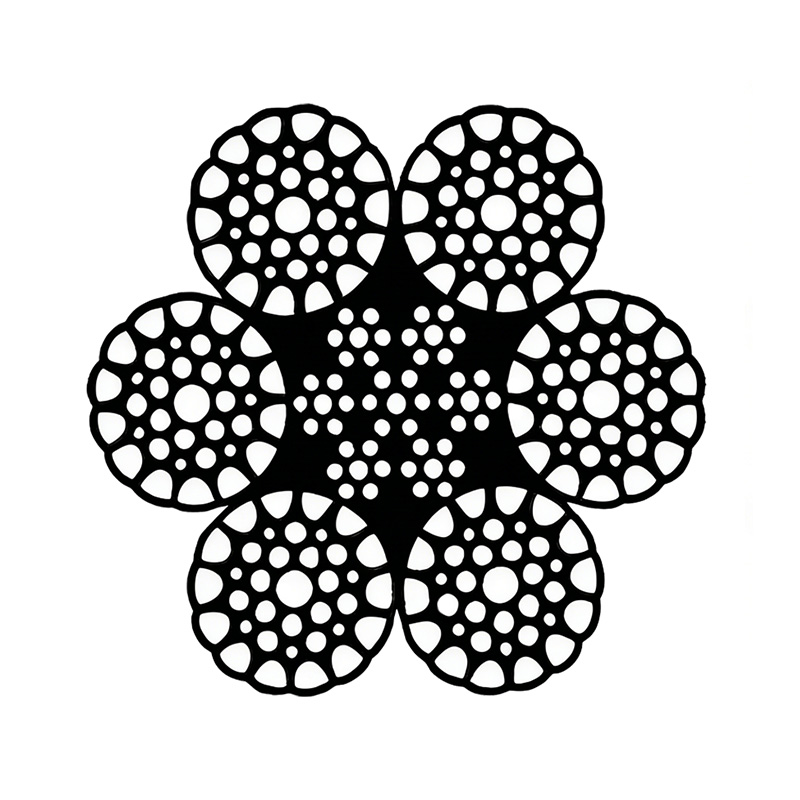 ISO 2408 6x36 Class Steel Wire Rope for Ultra-Flexible Applications This 6x36 class rope includes constructions like 6x36WS and 6x41WS, with FC or IWRC. Available up to 60 mm and 2160 MPa, its high outer wire count improves flexibility and fatigue resistance over small sheaves and drums. View Product →
 Hidden Factors That Actually Reduce 1/2 Inch Steel Cable Strength
The figure printed on a test certificate is the strength of a new, straight cable. In service, several conditions cut that value. The chart below shows the typical strength reduction range for a 1/2 inch steel cable in duty.
10–25%
Termination loss
15–30%
Small sheave / reverse bend
5–20%
Corrosion attack
5–15%
Temperature effect
Termination loss is the most commonly underestimated factor. A swaged or fitted end termination transfers load through strands and core differently from a loop with a thimble and clipping. If your design relies on a 5:1 safety factor, a 20 percent termination loss effectively changes the working load of a 1/2 inch 6x19 IWRC from 5,180 lbs to about 4,140 lbs. That is why the working load limit printed by the rigging supplier is usually lower than the breaking force divided by five.
Bend radius is the second hidden constraint. For a 1/2 inch cable, the recommended minimum sheave or drum diameter is typically 20 times the rope diameter. Below that, the cable experiences internal nicking and fatigue that can cut expected service life by half. The wire rope construction and finish guide covers how to match flexibility with abrasion resistance for your sheave ratio.
Where 1/2 Inch Steel Cable Strength Is Applied Across Operations
The strength requirements for a 1/2 inch cable vary by industry because the safety factor, inspection regime, and discard criteria differ. The distribution below reflects typical field usage seen in wire rope supply for lifting, hoisting, and specialty tensioning.
Lifting slings & rigging 40%
Crane & hoist lines 25%
Architectural & marine tension 15%
Other specialty uses 20%
For lifting slings, the 5:1 safety factor is the common baseline, but personnel lifting requires 8:1 or 10:1 depending on jurisdiction. For crane and hoist lines, the governing factor is more often fatigue life than the minimum breaking force, so 6x36 IWRC is preferred over 6x19 IWRC in fleeted multi-layer drums. For architectural tension cables, static loads are usually small relative to breaking force, but corrosion protection and terminations decide the design.
Selection Guide: How to Specify a 1/2 Inch Steel Cable
The procurement process becomes predictable when you follow a sequence that moves from load requirement to proof document. Use these five steps to narrow the field and avoid receiving a cable that meets the diameter but not the duty.
01
Define working load
Calculate the maximum intended load, then apply the safety factor from the standard. For general lifting, use 5:1. For personnel, use 8:1 or 10:1. This gives you the required working load limit.
02
Choose construction
Select 6x19 IWRC for abrasion resistance in drag or bearing-block situations. Select 6x36 IWRC for smaller sheaves and multi-layer winding. Choose 8x19 for a middle ground in flexibility and strength.
03
Pick grade & finish
Set minimum tensile grade at 1770 MPa for most industrial work and 1960 MPa where weight or size matters. Specify galvanized or bright finish based on exposure to moisture or chemicals.
04
Verify terminations
Confirm whether the supplier provides swaged sockets, clips, or eye loops. Ask for termination efficiency or the working load limit of the assembly, not just the bare cable breaking force.
05
Confirm test certificate
Request a mill test certificate or material certificate that matches the standard named on the purchase order. The certificate should state the minimum breaking force, grade, and applied standard.
For a manufacturer that can supply a 1/2 inch steel cable with a tested breaking force and a complete document set, the ordering process shortens considerably. The seven core rigging and lifting rules provide a useful checklist to run before the cable enters service.
Maintenance and Compliance for 1/2 Inch Steel Cable
A 1/2 inch steel cable can deliver its rated strength for years if you maintain it and retire it at the right time. The enforcement of discard criteria is as important as the initial specification.
Inspection frequency
- Visual inspection before each shift for a cable used in lifting.
- A more detailed inspection with measurement at intervals defined by duty, not calendar. For a 1/2 inch cable under heavy lifting, that is commonly every six months.
- Immediate inspection after any overload, shock load, or exposure to heat or chemicals.
Discard criteria
- Broken wires that exceed the limits in ISO 4309 or the applicable standard. For a 6x19 rope, one layer of broken wires is a clear discard signal.
- Reduction in diameter greater than 5 to 7 percent at any point, indicating core failure or severe wear.
- Kinks, birdcaging, or pronounced flattening, which mean the geometric structure is no longer carrying the load as designed.
- Corrosion with visible pitting on the outer wires, particularly in marine or chemical environments.
Compliance notes
When the cable is ordered, require the supplier to state which standard it follows: ISO 2408, EN 12385-4, or ASTM A1023. Each standard has its own classification and marking requirements. For the United States market, ASTM A1023 is common. For European projects, EN 12385-4 is the typical reference. For international offshore and general lifting, ISO 2408 often applies. The marking on the rope or its packaging should match the certificate.
Store 1/2 inch steel cables away from the floor, in a dry ventilated area, with a protective coating if the cable will sit for more than a few months. Never weld near a loaded cable and never expose the cable to direct flame. If you keep these rules, the strength printed on the test certificate remains a reliable design input.
For sourcing 1/2 inch steel cable with documented breaking force and a tested construction, the supplier team can walk through the application with you and confirm the specification, custom lengths, terminations, and packaging before ordering.
Verwandte Produkte
-
 Mehr anzeigen
-
 Mehr anzeigen
18×7 und 18×19 Stahldrahtseil ISO 2408 Klasse – Nicht rotierendes Seil
-
 Mehr anzeigen
1. 8×36WS-IWRC Stahldrahtseil – EN 12385-4
-
 Mehr anzeigen
ASTM a 1023 Klassifizierung 7x7 und 7x19 Spezialkabel mit kleinem Durchmesser (verzinkt).
-
 Mehr anzeigen
EN 12385-4 Klasse 8×19S-IWRC Stahldrahtseil – 8-litzige abgedichtete Konstruktion mit IWRC
-
 Mehr anzeigen
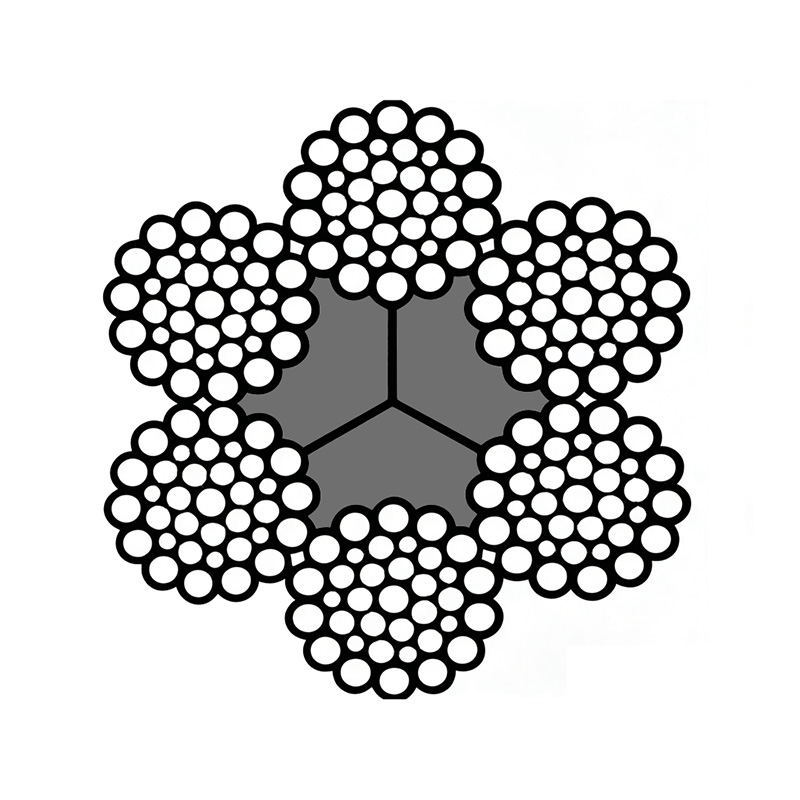
EN 12385-4 Klasse 6×36WS-IWRC Stahldrahtseil
Kontaktieren Sie uns
-

-
 +86-13395162883 / +86-0510-86361180
 -
 Nr. 25 Xizhang Road, Dorf Changshou, Stadt Zhouzhuang, Stadt Jiangyin, Stadt Wuxi, Provinz Jiangsu, China



Schreiben Sie uns jetzt eine Nachricht!
